Traditional vs Modern Careers: What’s Changing?
If you are a student, recent graduate, or mid-career professional, the career path your parents or teachers described probably feels outdated. The promise of a single stable job, steady promotions, and a pension after decades of loyalty sounds almost quaint. Today, work looks different: short-term projects, remote setups, side gigs, and constant upskilling. The shift from traditional to modern careers is not just hype—it is a fundamental change driven by technology, economic pressures, and evolving expectations about life and work.
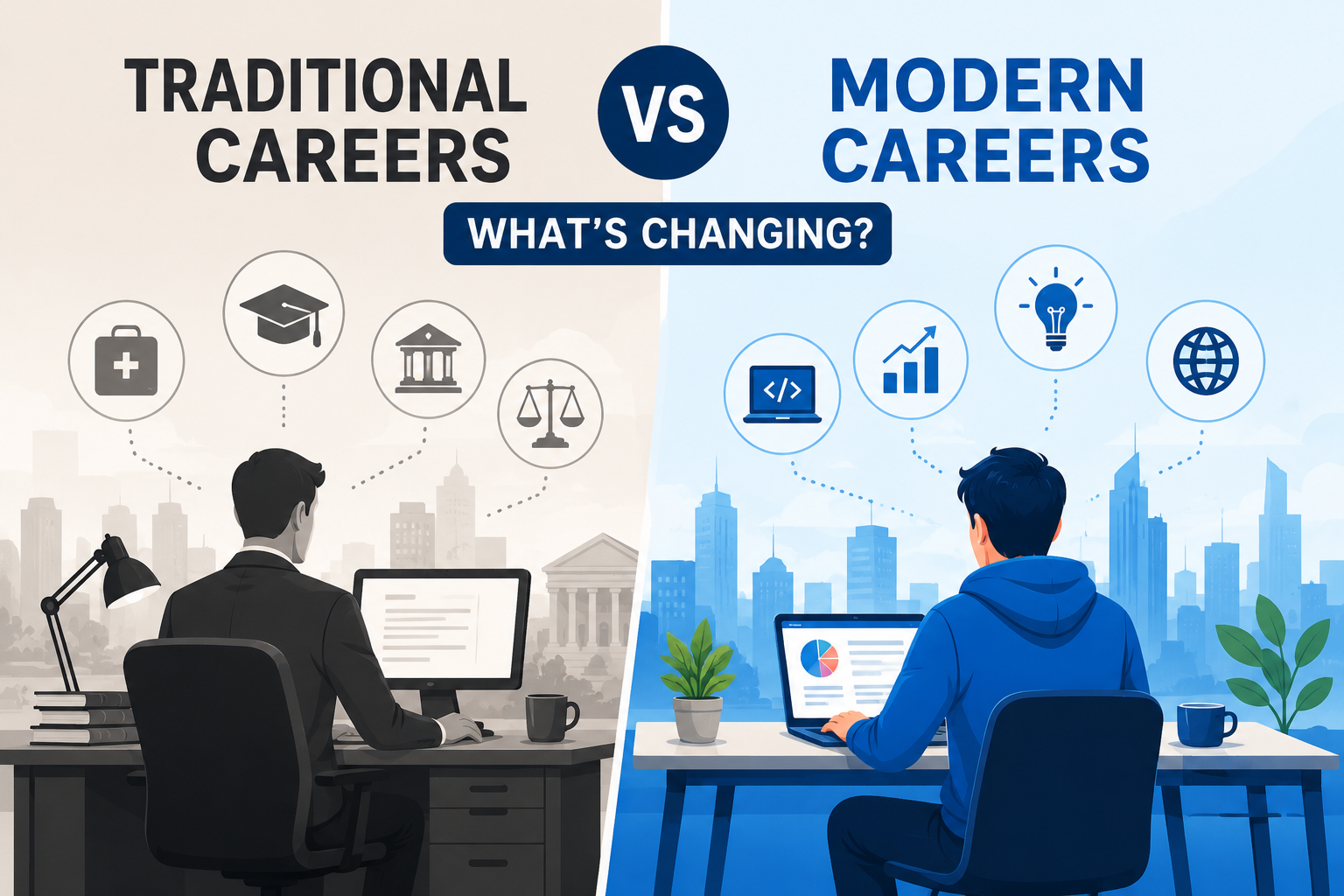
Traditional vs Modern Careers: What’s Changing?
If you are a student, recent graduate, or mid-career professional, the career path your parents or teachers described probably feels outdated. The promise of a single stable job, steady promotions, and a pension after decades of loyalty sounds almost quaint. Today, work looks different: short-term projects, remote setups, side gigs, and constant upskilling. The shift from traditional to modern careers is not just hype—it is a fundamental change driven by technology, economic pressures, and evolving expectations about life and work.
The data backs this up. The average person now changes jobs about 12 times over their working life. Median job tenure has dropped to just 3.9 years, the lowest in decades. More than one-third of the workforce participates in some form of gig or freelance work, and that share keeps climbing. At the same time, entire sectors are growing while others shrink or transform. Healthcare and professional services are adding millions of positions, but routine office roles face pressure from automation and new ways of working.
The good news is this evolution creates more options than ever. Traditional careers still offer structure and security for those who want them. Modern paths reward flexibility, creativity, and adaptability. The winners will be people who understand both worlds and blend the best of each. This article breaks down exactly what is changing, why it matters, and the concrete steps you can take to build a career that fits today’s reality—whether you prefer stability, freedom, or a smart mix of both.
What Traditional Careers Look Like Today
Traditional careers follow a familiar pattern: you train in one field, join an organization, climb a clear ladder of promotions, and often stay with the same employer (or similar ones) for years. Think roles in education, government, law, accounting, or certain healthcare positions. These paths emphasize loyalty, specialized expertise, and predictable routines.
Many traditional jobs remain rock-solid. Healthcare roles such as nursing or therapy continue to see strong demand because they require human connection and hands-on care that technology cannot fully replace. Skilled trades like plumbing, electrical work, or construction offer reliable pay and job security, especially as infrastructure needs grow. Public sector and education positions often come with benefits, job protections, and clear advancement tracks.
Yet even these fields are evolving. Entry-level positions that once served as training grounds are sometimes streamlined. Advancement now depends less on time served and more on results and new skills. The old model of “one job for life” has largely disappeared across the board.
What Modern Careers Look Like Today
Modern careers are fluid, project-based, and often boundary-less. They include freelancing, consulting, digital roles, entrepreneurship, and hybrid positions that combine multiple skills. Workers build portfolios instead of climbing ladders. They move between companies, industries, or even countries more easily.
Gig and freelance work now represent a massive slice of the economy. In the United States alone, tens of millions participate in freelance or contract work, contributing trillions in income. Globally, the gig economy is expanding rapidly, projected to reach hundreds of billions in value within the next few years. Remote and hybrid arrangements have become standard in many knowledge-based fields, letting people work from anywhere while juggling multiple clients or income streams.
These careers reward versatility. A content strategist might also run an online store, consult on digital tools, and teach workshops. A software developer could switch between full-time roles and independent projects depending on market needs. The focus is on outcomes, networks, and continuous learning rather than seniority.
The Major Forces Driving the Change
Several powerful trends explain why careers look so different now.
Technology and automation reshape daily work. Routine tasks in administration, data processing, and basic analysis are handled faster by intelligent systems. This frees people for higher-level strategy, creativity, and problem-solving—but it also means traditional entry points are shrinking in some fields.
The rise of the gig and freelance economy. More workers choose (or need) flexible arrangements. Platforms connect talent directly with opportunities, bypassing traditional employers. This model offers autonomy and variety but requires strong self-management and marketing skills.
Remote and hybrid work models. The ability to work from anywhere has expanded opportunities and changed expectations. While some organizations are tightening office requirements, hybrid setups remain popular because they improve focus, reduce commuting, and support better work-life balance for many.
Skills-based hiring over degrees. Employers increasingly value proven abilities more than formal credentials. Short certifications, bootcamps, and demonstrated projects often open doors faster than a traditional diploma alone. This levels the playing field for career changers and lifelong learners.
Generational priorities. Younger workers emphasize purpose, flexibility, and well-being. They are more willing to switch paths if a role does not align with their values or lifestyle goals.
These forces create a labor market where 22 percent of today’s jobs could be transformed by 2030 through creation of new roles and displacement of others—yet the net result is still positive growth overall.
Traditional vs Modern Careers: A Direct Comparison
Understanding the trade-offs helps you make informed choices.
Aspect | Traditional Careers | Modern Careers | What the Shift Means for You |
Job Security | Higher stability, often with protections | More variable; depends on skills and demand | You need personal resilience and savings |
Career Path | Linear ladder, predictable promotions | Non-linear, portfolio of experiences | Plan for pivots every few years |
Work Structure | Full-time, office-based, fixed hours | Flexible, remote/hybrid, project-based | Greater control but requires discipline |
Skill Focus | Deep specialization in one area | Broad, adaptable, tech + human skills | Combine expertise with continuous learning |
Income Predictability | Steady salary + benefits | Variable; potential for higher peaks | Diversify income streams |
Work-Life Balance | Structured but often rigid | More flexible, but can blur boundaries | Set clear personal rules |
Entry Barriers | Degrees, certifications, tenure | Demonstrated projects, networks | Build a visible portfolio early |
Both paths have strengths. Traditional roles suit those who thrive on routine and long-term security. Modern ones appeal to people who enjoy variety, independence, and rapid growth.
Core Skills That Bridge Both Worlds
Whether you lean traditional or modern, certain abilities will give you an edge in either.
Technical fluency matters more than ever. Basic data analysis, digital tools, and comfort with emerging technologies (including AI-assisted work) help you stay relevant. You do not need to be an expert coder, but understanding how systems work lets you collaborate effectively.
Human-centered strengths remain irreplaceable. Emotional intelligence, clear communication, critical thinking, adaptability, and leadership stand out. These “power skills” become even more valuable when machines handle routine tasks.
Self-management and lifelong learning. In modern setups you act as your own career manager—tracking opportunities, negotiating contracts, and updating skills. Even in traditional roles, the ability to learn quickly prevents obsolescence.
Networking and personal branding. Relationships and visibility matter across both models. Building a professional network and showcasing your work online opens doors regardless of your path.
A Practical 6-Step Plan to Navigate the Shift
You do not need to overhaul your life overnight. Start with these actionable steps.
Assess your current position honestly. List your skills, values, and non-negotiables. Decide whether you crave structure or crave freedom. Tools like simple career journaling or talking with a mentor can clarify this.
Build a versatile skill foundation. Invest time in high-demand areas: data literacy, communication, project management, and basic tech tools. Take short, targeted courses or create small projects that demonstrate real ability.
Create a portfolio mindset. Even if you stay in a traditional field, document your achievements, projects, and impact. In modern careers this becomes your calling card. Update it regularly with examples of results.
Test modern elements without burning bridges. Try a side gig, freelance project, or remote-friendly role while keeping your current position. This gives you real data on what fits your lifestyle.
Network across boundaries. Connect with people in both traditional and modern roles. Attend industry events, join online communities, or reach out for informational conversations. Diverse perspectives prevent tunnel vision.
Plan for financial and mental resilience. Build an emergency fund, diversify income where possible, and practice adaptability habits like regular reflection and goal setting. Treat your career as an ongoing experiment rather than a fixed destination.
Real-World Examples of Successful Transitions
Consider a teacher who moves from a traditional classroom role to creating online courses and consulting for educational technology. She keeps the fulfillment of helping students while gaining flexibility and higher earning potential through multiple streams.
Or picture an accountant who adds freelance financial coaching and data visualization services. The core expertise stays the same, but modern tools and platforms let him serve clients globally on his schedule.
These hybrids show the smartest approach: retain what works from traditional strengths while adopting modern flexibility.
Common Concerns and How to Address Them
Many worry that modern careers feel unstable or that traditional paths are disappearing. The truth is both still exist— they just operate differently. Job security now comes from your skill set and network, not from any single employer. If you value predictability, target growing traditional sectors like healthcare or trades. If you crave variety, lean into gig and project work while building savings buffers.
Another frequent question involves work-life balance. Modern flexibility can reduce commuting stress but may blur boundaries. The solution is intentional routines: clear start and stop times, dedicated workspaces, and regular breaks.
Entry-level challenges exist in both models. Traditional routes may have fewer openings; modern ones require self-promotion. The fix is the same—gain practical experience through projects, volunteering, or apprenticeships early.
Your Career Future Is Yours to Shape
The line between traditional and modern careers is blurring. Many roles now combine elements of both: stable organizations that offer hybrid work, or freelancers who build long-term client relationships. The most successful people treat their career as a dynamic journey. They stay curious, adapt quickly, and focus on delivering value that machines cannot replicate.
Start small. Pick one skill or one experiment this month. Whether you choose the security of a traditional path or the freedom of a modern one, the key is preparation and mindset. The workplace is changing fast, but people who understand the shifts and act on them will thrive.
The old rules no longer apply—but new opportunities are everywhere. Embrace the evolution, build skills that last, and design a career that fits your life instead of forcing your life to fit an outdated career.
Summary: Key Takeaways
Traditional careers offer structure and stability; modern ones provide flexibility and variety—both remain viable.
Job tenure is shorter, gig work is mainstream, and hybrid models dominate, driven by technology and changing priorities.
Success hinges on blending deep expertise with adaptable human skills plus basic tech fluency.
Build a portfolio, network widely, and treat learning as lifelong rather than one-time.
Diversify your approach: many people now combine elements of both traditional security and modern freedom.
Start acting today—small experiments and skill-building create big advantages over time.
FAQ
Are traditional careers dying out completely?
No. Fields like healthcare, education, skilled trades, and certain professional services continue to grow steadily and value stability. They are simply incorporating modern tools and expectations.
Is the gig economy a good long-term option?
It can be, especially if you treat it professionally with contracts, savings, and skill development. Millions earn full-time incomes this way, but it requires discipline and diversification to manage income swings.
Do I still need a college degree for most careers?
Degrees help in many traditional fields, but skills-based hiring is rising fast. Demonstrated abilities, certifications, and real projects often matter more than the credential alone.
How do I transition from a traditional to a modern career?
Start with side projects or freelance work in your current field. Update your skills, build an online presence, and network in flexible spaces. Test the waters before making a full leap.
What if I want both stability and flexibility?
Look for hybrid roles or organizations that offer remote options within traditional structures. Many people now maintain a primary role while adding selective gigs.
How important are soft skills in this new landscape?
Extremely. As technology handles routine work, abilities like communication, leadership, adaptability, and emotional intelligence become major differentiators.
Is it too late to change direction if I am already established?
Absolutely not. Career pivots happen at every stage. Focus on transferable skills, targeted learning, and gradual testing of new paths.
The world of work has changed, but that change favors those who prepare thoughtfully. Whether you lean traditional, modern, or somewhere in between, clarity about what is shifting puts you in control. Begin building the career you actually want—starting now.